
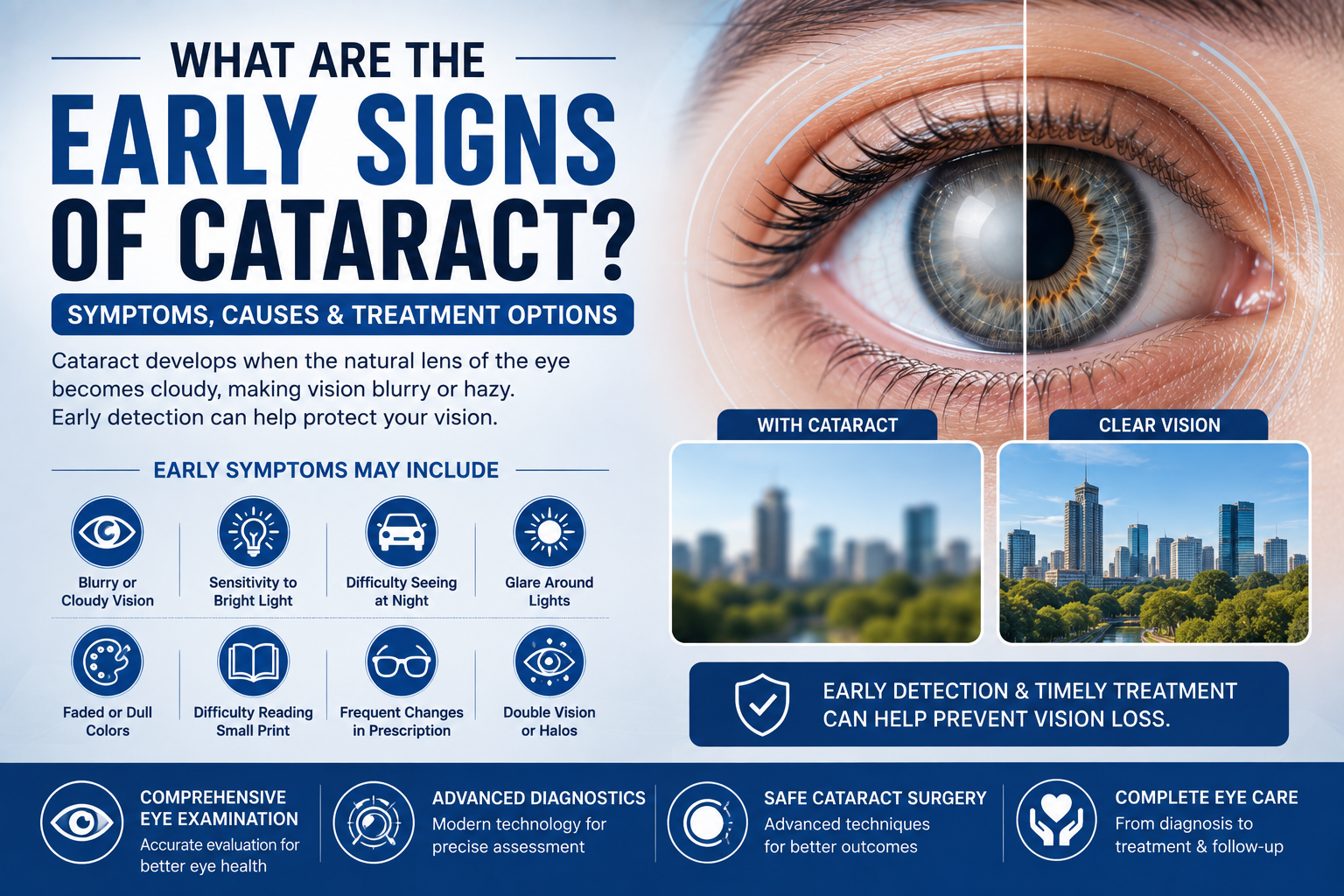
Cataract is a common eye condition in which the natural lens of the eye gradually becomes cloudy, affecting the clarity of vision. It often develops slowly, so early changes may not always be easy to notice. Recognising the early signs can help people seek an eye examination before vision problems begin to interfere with everyday activities.
If you are looking for the Best Cataract Hospital in Delhi, it is important to understand that cataract care should begin with a proper eye examination. An ophthalmologist can assess the lens, evaluate overall eye health, and determine whether the vision changes are related to cataract or another eye condition.
A cataract develops when the normally clear natural lens of the eye becomes cloudy. The lens helps focus light onto the retina, allowing the eye to produce a clear image. When the lens loses its transparency, light may not pass through it normally, which can result in blurred or hazy vision.
Cataract is commonly associated with ageing, but it can also develop due to other factors. Diabetes, previous eye injury or surgery, certain medications, and prolonged exposure to ultraviolet radiation may increase the risk.
The progression of cataract varies from person to person. Some people may experience gradual changes over several years, while others may notice vision becoming troublesome sooner.
Early cataract symptoms can be subtle, and a person may initially notice that their vision is not as clear as it used to be without experiencing significant discomfort. Common early signs include slightly blurred or cloudy vision, difficulty seeing clearly in low-light conditions, increased sensitivity to bright lights, glare around headlights or other light sources, colours appearing less bright or vivid, difficulty reading small text, frequent changes in spectacle prescription, and increasing difficulty performing activities that require clear vision. However, these symptoms can also occur with other eye conditions, so they do not automatically mean that a person has cataract.
Cataract generally progresses gradually, and the decision to treat it depends on how much it affects a person’s vision and daily activities.
An eye examination can help identify whether cataract is present and assess its severity. It can also help rule out other conditions that may cause similar vision changes.
For patients considering Cataract Treatment in Delhi, a consultation with a qualified ophthalmologist is an important first step. The doctor can evaluate the eyes and explain whether monitoring, updated spectacles, or another treatment approach may be appropriate.
Cataract can develop for several reasons, although ageing is one of the most common risk factors. Over time, changes in the proteins and structure of the natural lens can make it less transparent. Other factors that may increase the risk of cataract include increasing age, diabetes, previous eye injury or surgery, long-term use of certain medications, prolonged exposure to ultraviolet radiation, smoking, certain medical conditions, and family history in some cases. However, having a risk factor does not necessarily mean that a person will develop cataract. An ophthalmologist can assess individual risk based on medical history and a comprehensive eye examination.
Cataract is diagnosed through a comprehensive eye examination. The ophthalmologist evaluates vision and examines the natural lens to determine whether clouding is present.
The examination may also help identify other eye conditions that can cause similar symptoms. Depending on the patient’s condition, additional tests may be recommended to assess the overall health of the eye and support treatment planning.
A Cataract Specialist in Delhi can determine whether the vision changes are consistent with cataract and whether further evaluation is required.
In the early stages, cataract may not require immediate surgery. Depending on the level of vision loss, an ophthalmologist may recommend updated spectacles, improved lighting for reading, and regular monitoring.
However, these measures do not remove the cloudy natural lens. If cataract progresses and begins to interfere significantly with reading, driving, work, or other daily activities, cataract surgery may be considered.
The decision to undergo surgery should be based on the individual’s symptoms, visual needs, eye health, and examination findings.
Cataract surgery involves removing the cloudy natural lens and replacing it with an artificial intraocular lens, commonly known as an IOL.
Before surgery, the ophthalmologist evaluates the eye and discusses suitable treatment and lens options based on the patient’s eye health and visual requirements. The specific approach may vary from one patient to another.
Patients should discuss expected visual outcomes, possible risks, recovery, and follow-up requirements with their ophthalmologist before making a treatment decision.
Choosing the Best Cataract Hospital in Delhi should be based on your individual eye-care needs rather than only on online rankings or promotional claims.
Before selecting a hospital, consider:
A detailed consultation allows the ophthalmologist to assess the cataract and explain which treatment options may be appropriate for your eyes.
Recovery after cataract surgery can vary between individuals. Your ophthalmologist may provide instructions regarding prescribed eye drops, medicines, daily activities, and follow-up visits.
Following these instructions and attending scheduled appointments can help the doctor monitor the eye during recovery.
If you experience unexpected or worsening symptoms after surgery, such as significant pain, sudden vision changes, increasing redness, or swelling, contact your eye-care provider promptly.
Age-related cataract cannot always be prevented. However, protecting the eyes from excessive ultraviolet exposure, managing health conditions such as diabetes, and maintaining regular eye examinations may support overall eye health.
A cataract does not grow back after the cloudy natural lens has been removed. However, some patients can develop clouding of the capsule behind the artificial lens, which is a different condition and may be treated separately.
Cataract surgery is commonly performed, but the decision depends on the patient’s eye health, vision requirements, medical history, and examination findings. A qualified ophthalmologist should determine whether surgery is appropriate.
If you notice persistent blurred vision, glare, difficulty seeing at night, faded colours, or other changes in vision, consider scheduling an eye examination. A Cataract Eye Specialist in Delhi can assess the cause and recommend appropriate care.
Look for a Cataract Surgery Hospital in Delhi that provides appropriate evaluation, qualified ophthalmic care, suitable treatment options, patient-safety measures, and proper follow-up.
Recognising the early signs of cataract can help you seek an eye examination before vision changes significantly interfere with daily activities. Symptoms such as cloudy vision, glare, difficulty seeing at night, and faded colours should be evaluated rather than assumed to be caused by ageing alone.
If cataract is affecting your daily life, an ophthalmologist can assess the condition and explain whether monitoring, updated spectacles, or Cataract Surgery in Delhi may be appropriate.
The right treatment depends on your individual eye health, visual requirements, and clinical examination.
Bajaj Eye Care Centre provides comprehensive eye-care services, including cataract evaluation, cataract surgery, LASIK and refractive procedures, glaucoma care, retina treatment, cornea care, and other ophthalmic services. Patients can undergo a detailed eye examination to understand the cause of their vision changes and discuss suitable treatment options with an ophthalmologist.
The centre focuses on accurate diagnosis, individualised treatment planning, and follow-up care based on each patient’s eye health and visual needs. For patients experiencing symptoms of cataract, a professional consultation is an important first step before deciding on any treatment or surgical procedure.
If you are experiencing cloudy vision, glare, difficulty seeing at night, or other symptoms of cataract, schedule a comprehensive eye examination at Bajaj Eye Care Centre. Early evaluation can help determine whether cataract is affecting your vision and which treatment option may be appropriate for you.
Bajaj Eye Care Centre
Website: https://www.bajajeyecarecentre.com/
GMB : https://share.google/GPsSfybG5ELT1Lx2e
Facebook: https://www.facebook.com/p/Bajaj-Eye-Care-Centre-100057579605733/
Instagram: https://www.instagram.com/drbajajeyecarecentre/
Youtube:https://www.youtube.com/channel/UCDxfST8lHGSUfL1X3HiuE0Q
Medical Disclaimer: This article is intended for general informational and educational purposes only. It does not replace professional medical advice, diagnosis, or treatment. Cataract symptoms and treatment requirements can vary from person to person. Consult a qualified ophthalmologist for a comprehensive eye examination and personalised medical advice.
 153 Google reviews
101, Vikas Surya Plaza, Plot No -7, DDA Community Centre, Road No-44, Pitampura Delhi (Near M2K Picture Hall Pitampura, Rani Bagh, New Delhi, Delhi 110034
+91-9811219959 / 011-47024919 | bajaj_eyecare@yahoo.co.in
Eye Hospital In Delhi | Eye Hospital Near Me | Eye Clinic Near By


