
A practical guide to the tests, decisions and questions that matter before choosing laser vision correction | Bajaj Eye Care Centre, Pitampura
Searching for LASIK surgery in Delhi often begins with a simple question: can I stop depending on my spectacles? The more useful first question is whether your eyes are suitable for laser vision correction in the first place. A consultation should establish what is causing blurred vision, whether your prescription has stabilised, whether the cornea is healthy enough for surgery and which options, if any, fit your visual needs.
A person who sees clearly with glasses may still have dry eye, an irregular corneal shape, an early cataract or another condition that changes the treatment plan. Choosing LASIK, SMILE or a different approach before testing can lead to unrealistic expectations. This guide focuses on the steps of an appropriate pre-surgery assessment rather than repeating a general explanation of laser surgery.
For patients looking for an eye hospital in Delhi, a LASIK hospital in Delhi or a doctor for LASIK in Delhi, understanding the examination makes it easier to have a meaningful discussion with an ophthalmologist. Tests and recommendations are individual; no online article can confirm candidacy.
By the end of a detailed examination, you should understand five things: your current refractive error; whether it is stable; whether your corneal shape and thickness permit the proposed treatment; whether any ocular surface or eye disease must be treated first; and what improvement or limitations are realistic for your age and lifestyle. In some cases, the appropriate outcome of the assessment is to defer or avoid surgery.
Laser vision correction changes how light is focused by altering corneal optics. It does not prevent every future eye problem. Age-related near-vision changes and cataracts may still occur even if distance vision improves after surgery. Separating refractive error from other eye conditions is therefore essential.
The visit usually begins with your current spectacles, previous prescriptions and a discussion of symptoms. The team may ask when your power last changed, whether one eye differs markedly from the other, how you see while driving at night and whether you regularly wear contact lenses. A consistent prescription over time is one of the considerations when assessing suitability. A recent or continuing change may mean the plan should be postponed.
Refraction measures the amount of myopia, hyperopia and astigmatism that must be corrected. Your clinician may compare unaided vision, vision with your present spectacles and the clearest corrected vision achievable during testing. These measurements help identify whether blurring is attributable to power alone or if further assessment is necessary.
Bring older prescriptions if you have them. A history of frequent power changes, repeated eye rubbing, allergies or reduced vision despite new glasses can provide information that a single eye chart cannot reveal.
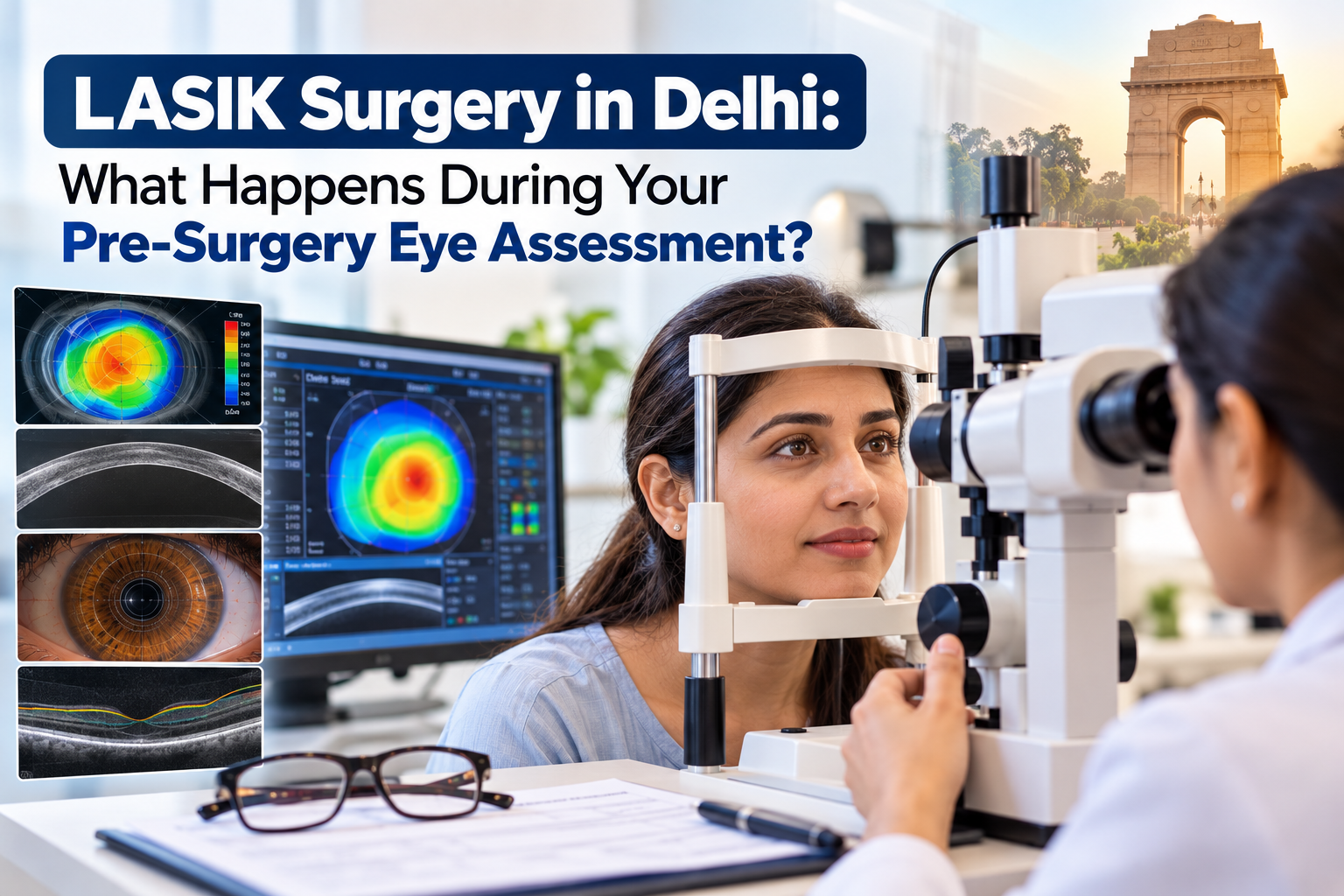
Your cornea is the transparent window at the front of the eye. LASIK reshapes it, so its structure needs careful evaluation. Corneal topography maps the surface curvature; tomography may assess front and back corneal surfaces and thickness distribution. These investigations can help detect unusual patterns that increase concern about corneal weakness or ectasia.
Pachymetry measures corneal thickness. There is no single thickness number that automatically makes someone suitable or unsuitable. Your doctor also considers the amount of tissue expected to be altered, the planned flap where applicable, residual tissue, refractive power, mapping results and other risk factors. A comparatively thin or irregular cornea may lead the surgeon to recommend another approach, additional tests or no elective surgery.
An important example is keratoconus, a condition in which the cornea can progressively thin and change shape. Standard corneal laser refractive surgery is generally unsuitable when keratoconus is present. A different treatment pathway may be needed, depending on the condition.
Dryness may cause burning, fluctuating clarity, grittiness, watering, light sensitivity or discomfort during prolonged screen use. Dry eye is relevant both because it can distort measurements and because refractive surgery can worsen symptoms in some patients. A preoperative evaluation may examine the tear film, eyelid margins and ocular surface, with additional tests where indicated.
Not everyone with mild dryness is automatically excluded, but untreated or significant dry eye may warrant treatment and repeat measurements before deciding on surgery. Mention symptoms even if they are intermittent. Contact lens intolerance, frequent use of lubricating drops or morning irritation can be useful clues.
Bajaj Eye Care Centre describes its dry eye services here: Dry eye evaluation: https://www.bajajeyecarecentre.com/dry-eyes-evaluation.html
A refractive surgery work-up is more than an eye-power check. The ophthalmologist may examine the pupils, lens, eye pressure and, when clinically indicated, the retina and optic nerve. Dilating drops may be used to view the back of the eye. Some assessments can temporarily blur near vision or increase light sensitivity, so ask whether you should arrange transport.
High myopia may be associated with retinal problems that need attention independently of refractive surgery. A cataract can be the reason spectacles are no longer producing clear vision, particularly in older adults. Glaucoma, corneal scarring, previous infection or inflammation may affect suitability and follow-up. Treating the underlying problem can be more important than proceeding with glasses-removal surgery.
A responsible LASIK consultation includes questions about diabetes, autoimmune disease, delayed wound healing, pregnancy or breastfeeding, previous ocular operations, eye injury and regular medication. These details do not all have the same implications, but they can change timing and safety decisions. Do not stop prescribed medicines without advice from the clinician who manages them.
Your occupation also matters. Someone who works in a dusty environment, plays contact sports, drives extensively at night or requires highly precise near vision may need a different counselling discussion. For example, glare and halos can affect night vision after refractive surgery. A specific outcome for an individual cannot be guaranteed.
Contact lenses can temporarily change the curvature of the cornea. If testing is performed before the cornea returns to its baseline shape, the measurements used to plan treatment may be less reliable. Tell the clinic whether you wear soft, toric, rigid gas-permeable or hard lenses and follow its instructions on stopping them before evaluation. The waiting interval varies by lens type and individual findings.
Do not assume you can simply remove lenses in the waiting room before a definitive screening examination. Ask the clinic for its current preparation protocol when you book, and use your spectacles during the recommended period. Sometimes repeat scans are needed to confirm stable readings.
LASIK uses a corneal flap and excimer laser reshaping to treat eligible refractive errors. There are different technical approaches to creating the flap, including femtosecond laser-assisted, or blade-free, LASIK. Candidacy depends on the prescription and the overall eye examination, not just the name of the equipment. Details of the centre’s LASIK service are available at: LASIK treatment information: https://www.bajajeyecarecentre.com/lasik-treatment-in-pitampura-lasik-treatment-cost-pitampura-lasik-eye-surgery-pitampura-lasik-surgery-in-delhi.html
SMILE, short for small incision lenticule extraction, is a laser vision correction procedure in which a lenticule of corneal tissue is created and removed through a small incision. Its indications differ from those of LASIK and depend on clinical and technology-specific factors. A surgeon may discuss SMILE when it is appropriate, but it is not automatically preferable for every prescription or patient. See the centre’s SMILE service information: https://www.bajajeyecarecentre.com/smile-laser-eye-surgery-in-delhi-laser-eye-surgery-in-delhi-lasik-surgery-in-delhi.html
Some patients may be considered for surface-ablation procedures or other refractive solutions following specialist assessment; others should continue with spectacles or contact lenses. Your ophthalmologist should explain why a particular approach is recommended, what alternatives are reasonable and why one or more options may not be advised.
For broader background on how LASIK works, see this previously published patient guide: LASIK and clearer eyesight: patient education: https://www.bajajeyecarecentre.com/blog/lasik-a-visionary-solution-for-clearer-eyesight/
Instead of asking only whether laser surgery is safe, ask what risks matter for your own eyes. Possible outcomes and complications can include temporary or persistent dryness, glare, halos, under-correction, over-correction, visual fluctuation, infection, inflammation and, rarely, more serious vision-threatening problems. The degree of risk depends on individual factors and the procedure chosen.
Discuss expected recovery, work and screen-use restrictions, driving, medication, follow-up visits, emergency contact arrangements and the possibility of needing spectacles afterwards. A good consultation allows enough space for questions and explains what treatment cannot reliably accomplish. If an assessment uncovers an issue, delaying the procedure may be a positive clinical decision.
Ask your ophthalmologist which findings establish that your prescription is stable. Request an explanation of the corneal mapping and thickness results, and whether they reveal any warning signs. Ask whether dry eye or any other condition needs treatment before surgery. Confirm which procedure is being proposed, what alternatives exist and how your job, night driving, sports and age affect the recommendation.
You can also ask who will perform the surgery, what follow-up is expected, how complications would be managed and what the quoted fee includes. These are practical patient-safety questions, not signs of mistrust. If the explanation is unclear, request a simpler account or take time before making a decision.
The ability to focus on near objects generally changes with age because the natural lens becomes less flexible. This is called presbyopia. Conventional distance-targeted LASIK does not stop ageing of the lens; you may still require reading glasses even when distance vision is good. Some patients may be evaluated for approaches that account for near-vision needs, but suitability is highly individual.
Bring examples of what you want to see clearly: a phone at arm’s length, documents at desk distance, a laptop, distant road signs or fine print. These situations may matter more than the simple goal of “removing glasses.” The discussion should also consider existing cataract and ocular health before any recommendation is made.
There are sensible reasons to delay elective refractive surgery: unstable spectacle power, significant dry eye, suspicious corneal findings, pregnancy-related prescription changes, an active eye infection or an incomplete work-up. A postponement does not necessarily mean surgery will never be possible; it means the immediate priority is reliable assessment and eye health.
A sudden change in vision, flashes, a shower of new floaters, a shadow over the visual field, severe eye pain or marked redness requires prompt clinical evaluation rather than an elective LASIK appointment. These symptoms may indicate a condition that needs urgent attention.
People searching for a hospital for LASIK in North West Delhi or an eye doctor in Delhi may find it useful to choose a location they can return to for evaluation and postoperative visits. Bajaj Eye Care Centre is located in Pitampura, New Delhi. Its official website lists LASIK, SMILE, cataract and several other ophthalmic services; availability of a particular treatment for an individual patient should be established during the examination.
Bajaj Eye Care Centre lists Dr. Rajiv Bajaj, MBBS, MS (Ophthalmology), on its official website. The centre’s published information identifies its Pitampura location and contact numbers. Rather than assuming that a hospital for glasses removal in Delhi will suit everyone, arrange an eye examination and ask the clinician to explain the findings.
No. Power is only one factor. Corneal mapping, corneal thickness, tear-film health, prescription stability and a broader eye examination are needed before suitability can be assessed.
It maps the shape of the cornea and helps identify irregularities that may make laser reshaping unsafe or require further investigation.
Significant or uncontrolled dry eye can increase the likelihood of symptoms and may require treatment or postponement. Your ophthalmologist will assess the severity and discuss options.
Often yes, because lenses can alter corneal measurements. The time required depends on your lens type. Contact the clinic for specific instructions rather than guessing.
No. Both are corneal refractive procedures, but the surgical techniques and indications differ. Your examination helps determine which, if either, may be appropriate.
No. Stable power is important but does not rule out thin or irregular corneas, dry eye, other eye disease or medical factors that affect treatment.
No result can be guaranteed. Some people still need spectacles for particular tasks, residual power or age-related reading needs.
Age alone does not settle eligibility. Presbyopia, lens health, cataract status and visual priorities must be discussed, including possible need for reading glasses.
Some tests, especially pupil dilation, can cause temporary blur and light sensitivity. Ask the clinic in advance and arrange transport if dilation is planned.
Bring current spectacles, previous prescriptions if available, a list of medicines, information about contact lens use and notes about symptoms and your work or visual needs.
Bajaj Eye Care Centre, 101, Vikas Surya Plaza, Plot No. 7, DDA Community Centre, Road No. 44, Pitampura, near M2K Picture Hall, Rani Bagh, New Delhi, Delhi 110034.
Official website: https://www.bajajeyecarecentre.com/ | Phone: +91-9811219959 or 011-47024919. For appointment enquiries and updated visit instructions: Contact and appointment details: https://www.bajajeyecarecentre.com/eye-care-hospital-in-pitampura-eye-hospital-in-pitampura-eye-clinic-in-pitampura-ophthalmology-clinic-pitampura-rani-bagh-west-delhi.html
Choosing LASIK surgery in Delhi is not simply a comparison of procedure names or advertised prices. It begins with accurate measurements, an understanding of personal risks and a conversation about the vision you use every day. Whether the final plan is LASIK, SMILE, another treatment or no surgery, an informed decision starts with identifying what is suitable for your eyes.
Medical note: This article provides general patient education, not a diagnosis or personal surgical recommendation. An ophthalmologist must evaluate individual suitability. Seek urgent care for sudden vision loss, severe eye pain or other acute visual symptoms.
 153 Google reviews
101, Vikas Surya Plaza, Plot No -7, DDA Community Centre, Road No-44, Pitampura Delhi (Near M2K Picture Hall Pitampura, Rani Bagh, New Delhi, Delhi 110034
+91-9811219959 / 011-47024919 | bajaj_eyecare@yahoo.co.in
Eye Hospital In Delhi | Eye Hospital Near Me | Eye Clinic Near By


