
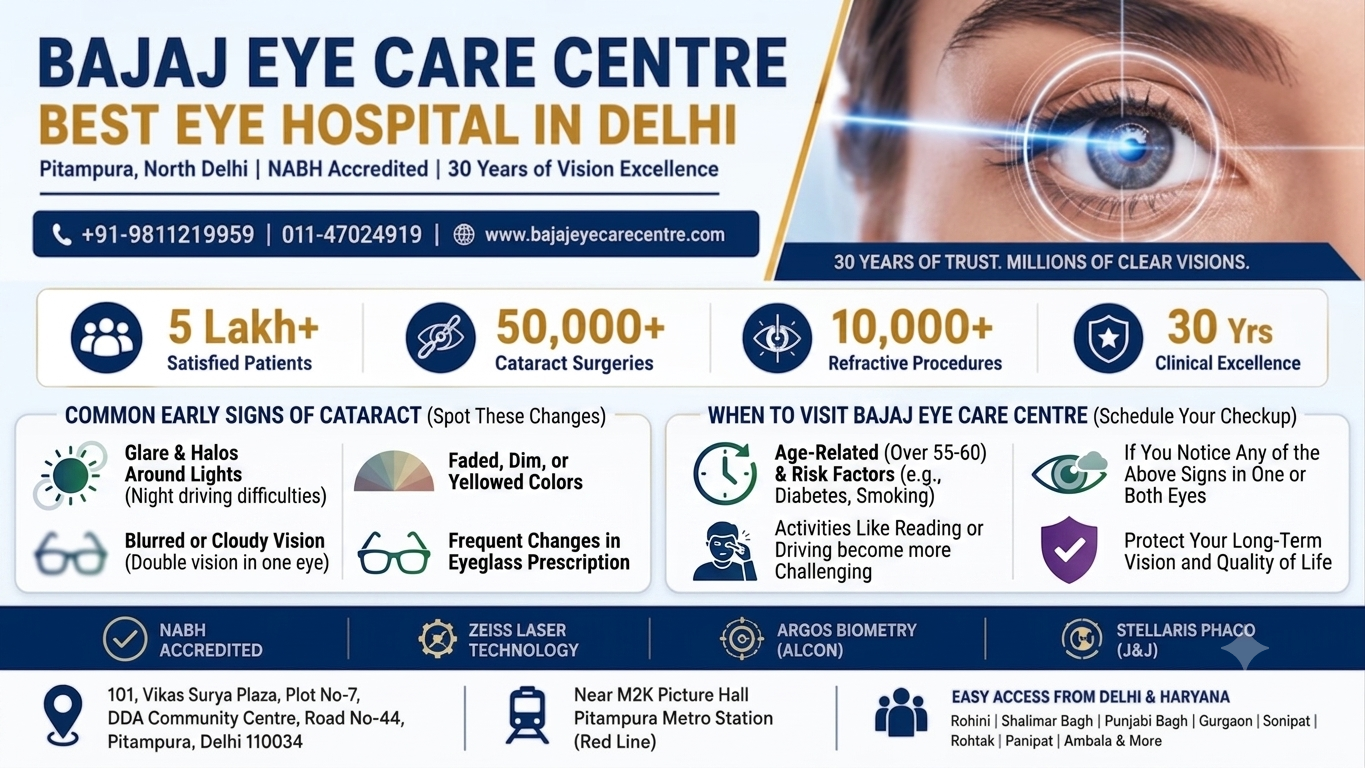
Did you know that cataracts are one of the leading causes of vision loss worldwide, yet they are also among the most treatable eye conditions? Many people dismiss early vision changes as a normal part of ageing, delaying treatment until daily activities become difficult. Recognizing the warning signs early and consulting the Best Cataract Hospital in Delhi can help protect your vision and improve your quality of life.
A cataract develops when the natural lens of the eye becomes cloudy, making it harder for light to pass through clearly. While cataracts commonly affect older adults, they can also occur due to diabetes, eye injuries, prolonged steroid use, or genetic factors. Early diagnosis allows eye specialists to monitor the condition and recommend the right treatment at the right time.
At Bajaj Eye Centre, patients receive comprehensive eye examinations, advanced diagnostic services, and personalized cataract treatment plans using modern surgical technology. If you notice changes in your vision, seeking expert care early can help you maintain clear eyesight and continue enjoying your daily activities without unnecessary limitations.
A cataract is the gradual clouding of the eye’s natural lens. This cloudiness prevents light from focusing properly on the retina, resulting in blurred or hazy vision.
Cataracts usually develop slowly, which is why many people fail to recognize the symptoms during the early stages. Fortunately, cataract surgery is one of the safest and most successful medical procedures available today.
Several factors increase the risk of developing cataracts, including:
Although ageing remains the most common cause, lifestyle and overall health also play an important role in cataract development.
Recognizing the symptoms early can prevent unnecessary vision loss.
One of the earliest symptoms is vision that appears cloudy, foggy, or blurry despite wearing the correct glasses.
Many patients notice poor night vision or increased difficulty while driving after sunset.
Bright sunlight or vehicle headlights may appear uncomfortable or create excessive glare.
Seeing rings or halos around streetlights and headlights is another common warning sign.
If your spectacles need frequent updates without significant improvement, cataracts may be the underlying reason.
Colours may appear dull, faded, or less vibrant than before.
Some individuals experience double vision in a single eye during the early stages.
If you experience any of these symptoms, it is advisable to consult an experienced ophthalmologist promptly.
You should schedule a comprehensive eye examination if you experience:
Early evaluation helps determine whether cataracts are responsible for your symptoms and whether surgery is necessary immediately or later.
At Bajaj Eye Centre, cataracts are diagnosed through a detailed eye examination that may include:
Measures how clearly you can see objects at different distances.
Allows the ophthalmologist to examine the lens, cornea, iris, and other eye structures under magnification.
Special eye drops widen the pupils for a detailed assessment of the retina and lens.
Advanced biometric testing helps calculate the ideal artificial lens for cataract surgery.
Accurate diagnosis ensures personalized treatment planning for optimal visual outcomes.
The treatment depends on the severity of the cataract.
In mild cases, symptoms may be managed temporarily through:
However, these measures do not stop cataract progression.
Once vision begins affecting daily life, Cataract Surgery in Delhi becomes the most effective treatment.
During surgery:
Modern cataract surgery offers excellent success rates and significant improvements in vision.
Seeking treatment before vision deteriorates significantly provides several advantages.
Early treatment helps patients maintain an active and productive lifestyle.
Ignoring cataract symptoms can lead to:
Delaying treatment rarely provides any benefit once cataracts begin interfering with daily life.
Although age-related cataracts cannot always be prevented, healthy habits may reduce your risk.
Routine eye check-ups remain one of the best ways to detect cataracts early.
Choosing the right eye hospital plays a vital role in successful treatment.
Patients trust Bajaj Eye Centre because of its:
The hospital is committed to providing quality eye care for patients across Delhi.
Modern technology improves both surgical precision and patient comfort.
At Bajaj Eye Centre, advanced cataract care includes:
These technologies help achieve predictable visual outcomes while supporting faster recovery.
The experienced ophthalmologists at Bajaj Eye Centre provide evidence-based cataract care tailored to each patient’s individual needs.
The clinical team focuses on:
Their patient-first approach ensures every individual receives compassionate, ethical, and high-quality eye care.
The earliest signs include blurred vision, glare from lights, difficulty seeing at night, faded colours, and frequent changes in glasses prescription.
Most age-related cataracts develop after the age of 60, although they may occur earlier due to diabetes, eye injuries, medications, or genetic factors.
No. Cataract surgery is usually performed under local anaesthesia. Most patients experience little to no pain during the procedure.
The procedure generally takes between 15 and 30 minutes, and patients usually return home the same day.
Many patients resume light daily activities within a few days, although complete healing may take several weeks depending on individual recovery.
No. A cataract does not return after the cloudy lens is removed. However, some patients may develop posterior capsule opacification (PCO), which can be easily treated with a quick laser procedure.
You should consult an eye specialist if blurry vision, glare, night driving difficulty, or fading colours begin affecting your daily routine.
Cataracts develop gradually, making it easy to overlook the early warning signs. Blurred vision, glare, difficulty seeing at night, and frequent prescription changes should never be ignored. Timely diagnosis allows appropriate monitoring and treatment before vision loss begins affecting everyday life.
If you are experiencing symptoms of cataracts, consulting the Best Cataract Hospital in Delhi can help you receive an accurate diagnosis and the most suitable treatment plan. Modern Cataract Surgery in Delhi is highly effective, safe, and capable of restoring clear vision for most patients.
If you or a loved one is noticing early signs of cataracts, schedule a comprehensive eye examination at Bajaj Eye Centre.
Address: 101, Vikas Surya Plaza, Plot No. 7, DDA Community Centre, Road No. 44, Pitampura, Near M2K Picture Hall, Rani Bagh, New Delhi, Delhi 110034
Phone: 098112 19959
Website: https://www.bajajeyecarecentre.com/
Youtube:https://www.youtube.com/channel/UCDxfST8lHGSUfL1X3HiuE0Q
GMB : https://share.google/GPsSfybG5ELT1Lx2e
Facebook: https://www.facebook.com/p/Bajaj-Eye-Care-Centre-100057579605733/
Instagram: https://www.instagram.com/drbajajeyecarecentre/
Location: Bajaj Eye Care Centre, 101, Vikas Surya Plaza, Plot No -7, DDA Community Centre, Road No-44, Pitampura Delhi (Near M2K Picture Hall Pitampura, Rani Bagh, New Delhi, Delhi 110034
Early diagnosis can make a significant difference in preserving your vision. Contact Bajaj Eye Centre today to receive expert cataract evaluation and personalized treatment from an experienced eye care team in Delhi.
 153 Google reviews
101, Vikas Surya Plaza, Plot No -7, DDA Community Centre, Road No-44, Pitampura Delhi (Near M2K Picture Hall Pitampura, Rani Bagh, New Delhi, Delhi 110034
+91-9811219959 / 011-47024919 | bajaj_eyecare@yahoo.co.in
Eye Hospital In Delhi | Eye Hospital Near Me | Eye Clinic Near By


