
Blurred vision is not a diagnosis. One person may need a new spectacle prescription, another may have a developing cataract, and a third may have a retinal problem that requires prompt assessment. Even the phrase “eye hospital in Delhi” describes a place to seek help, not a particular treatment. The useful first question is: what has changed in your sight, how quickly did it change, and what other symptoms are present?
This guide is designed for people in Delhi who are deciding whether to see an eye doctor for a routine check, discuss LASIK or SMILE surgery, or seek evaluation for cataract, glaucoma or retinal symptoms. It explains how different problems are investigated, why some warning signs should not wait, and how to prepare for a useful consultation. It does not attempt to diagnose an eye condition online.
Bajaj Eye Care Centre is an eye hospital in Delhi located in Pitampura, North West Delhi. Its website describes ophthalmic services that include refractive assessment, cataract care, glaucoma evaluation, retinal services and dry-eye evaluation. Whether any examination or procedure is appropriate depends on an individual clinical assessment.
A sudden new loss of sight, a dark curtain or shadow, flashes with a sudden shower of floaters, a painful red eye with reduced vision, or a new visual problem accompanied by weakness or speech difficulty should be treated as potentially urgent. Seek immediate emergency medical or ophthalmic assessment rather than waiting for an ordinary appointment. Such symptoms can be associated with retinal detachment, vascular events, acute pressure-related conditions or neurological emergencies. Time can matter.
Distance blur may result from myopia or astigmatism, but the explanation cannot be confirmed by the symptom alone. If a new prescription restores clear vision, spectacles or contact lenses may be sufficient. If a person is considering long-term reduction of spectacle dependence, a separate refractive-surgery suitability examination is needed. The decision should not be made from spectacle power alone.
Light scatter from cataract can contribute to glare, although dry eye, uncorrected refractive error and other optical problems can also cause similar complaints. Mention whether glare is present only at night, whether headlights appear unusually bright, and whether it has affected driving. An eye examination can determine whether lens clouding or another issue is responsible.
Presbyopia is an age-related reduction in near focusing ability. Many people notice that they hold a phone farther away or need more light when reading. Reading glasses may help, but new reading difficulty should still be assessed when accompanied by other symptoms or impaired distance vision. Presbyopia and cataract are not the same condition, and treatment choices differ.
Dry eye can cause fluctuating vision, irritation and discomfort during prolonged screen use. Excessive watering does not exclude dry eye. An eye doctor may assess the eyelid margins, tear film and ocular surface before recommending treatment. People should avoid repeatedly using redness-relief or steroid eye drops without medical advice.
For stable, gradually changing vision without warning signs, a comprehensive consultation may include visual acuity, refraction, slit-lamp examination and further testing based on symptoms, age and risk factors. If dilation is recommended, allow time for temporary near blur and light sensitivity. A dilated examination can help the ophthalmologist inspect the lens, optic nerve and retina when clinically indicated.
Tell the examiner about diabetes, high blood pressure, previous eye surgery, glaucoma in the family, contact-lens use and all eye medicines. These details affect which tests are useful. A normal-looking eye does not always mean the retina or optic nerve is healthy.
Cataract gradually clouds the eye’s natural lens. Symptoms can include duller colours, reduced clarity, glare, frequent changes in spectacle prescription and difficulty with daily activities. Ageing is a common cause, but cataract can also occur after trauma or alongside certain medical conditions. A cataract hospital in Delhi should explain both whether a cataract is present and whether it meaningfully accounts for the patient’s visual problems.
If cataract affects daily function, the ophthalmologist may discuss surgery, in which the cloudy lens is removed and an intraocular lens is implanted. Lens options can involve trade-offs in distance vision, near vision, glare and spectacle use. Surgery is not automatically necessary when a small cataract is first identified. The timing is individual, based on symptoms, examination findings and patient priorities.
Bajaj Eye Care Centre provides information on cataract procedures and intraocular lens choices at its cataract service page: https://www.bajajeyecarecentre.com/cataract-surgery-in-pitampura-cataract-surgery-cost-in-pitampura-cataract-surgery-in-delhi-phaco-surgery-iol-surgery.html
LASIK and SMILE aim to change the eye’s focusing power by reshaping the cornea. They are elective procedures for carefully selected adults with suitable refractive errors. An eye doctor for LASIK in Delhi should consider prescription stability, corneal shape and thickness, tear-film health, pupil-related symptoms and overall eye health before recommending a procedure. Not every patient who wears glasses is eligible.
LASIK typically uses a corneal flap followed by excimer-laser reshaping. SMILE uses a femtosecond laser to create a lenticule that is removed through a small incision. The appropriate procedure depends on the specific refractive error and clinical findings; neither approach is universally suitable. Some patients may be advised against corneal laser surgery or may prefer to continue wearing glasses or contact lenses.
Patients comparing a LASIK hospital in Delhi and SMILE surgery in Delhi should ask for a personalised explanation of expected benefits, dry-eye considerations, possible glare or halos, undercorrection or overcorrection, and the potential need for further correction. No responsible consultation can guarantee permanent freedom from spectacles. Age-related near-vision changes may still occur later.
For a description of the centre’s refractive surgery services, see LASIK treatment: https://www.bajajeyecarecentre.com/lasik-treatment-in-pitampura-lasik-treatment-cost-pitampura-lasik-eye-surgery-pitampura-lasik-surgery-in-delhi.html and SMILE surgery: https://www.bajajeyecarecentre.com/smile-laser-eye-surgery-in-delhi-laser-eye-surgery-in-delhi-lasik-surgery-in-delhi.html
Glaucoma involves progressive optic nerve damage, often associated with eye pressure, and may develop without noticeable symptoms in its early stages. A normal reading on one pressure test does not rule it out. Depending on the examination, evaluation can include optic nerve assessment, visual field testing, imaging and corneal thickness measurement. Patients with a family history of glaucoma or previous concerning findings should discuss appropriate follow-up intervals.
Treatment may involve eye drops, laser treatment or surgery to reduce the risk of further loss, depending on the type and severity of glaucoma. Lost vision generally cannot be restored by routine glaucoma treatment, which is why detection and ongoing monitoring matter. Bajaj Eye Care Centre’s glaucoma information is available at https://www.bajajeyecarecentre.com/glaucoma-diagnosis-glaucoma-treatment-in-pitampura-glaucoma-treatment-in-delhi-glaucoma-specialist-in-delhi.html
Straight lines appearing wavy, distortion in the centre of vision, new floaters with flashes, or a missing area of sight deserve ophthalmic attention. Diabetic retinal disease may produce few symptoms until damage has progressed, so people with diabetes need retinal examinations at intervals recommended by their clinician. Dilated retina assessment and, when appropriate, optical coherence tomography or retinal photographs help identify problems that cannot be judged from a spectacle check.
Sudden flashes, a new cluster of floaters or a curtain-like shadow should be assessed urgently. Patients should not assume that a symptom is simply age-related or caused by increased screen time.
Dry-eye management often begins by understanding symptoms, contact-lens habits, medicines, eyelid health and screen-use patterns. A treatment plan may include lubrication, environmental adjustments, eyelid care or prescribed therapies according to the diagnosis. Persistent eye redness, sensitivity to light, pain or reduced vision needs examination rather than self-treatment. Read about the centre’s dry-eye evaluation service at https://www.bajajeyecarecentre.com/dry-eyes-evaluation.html
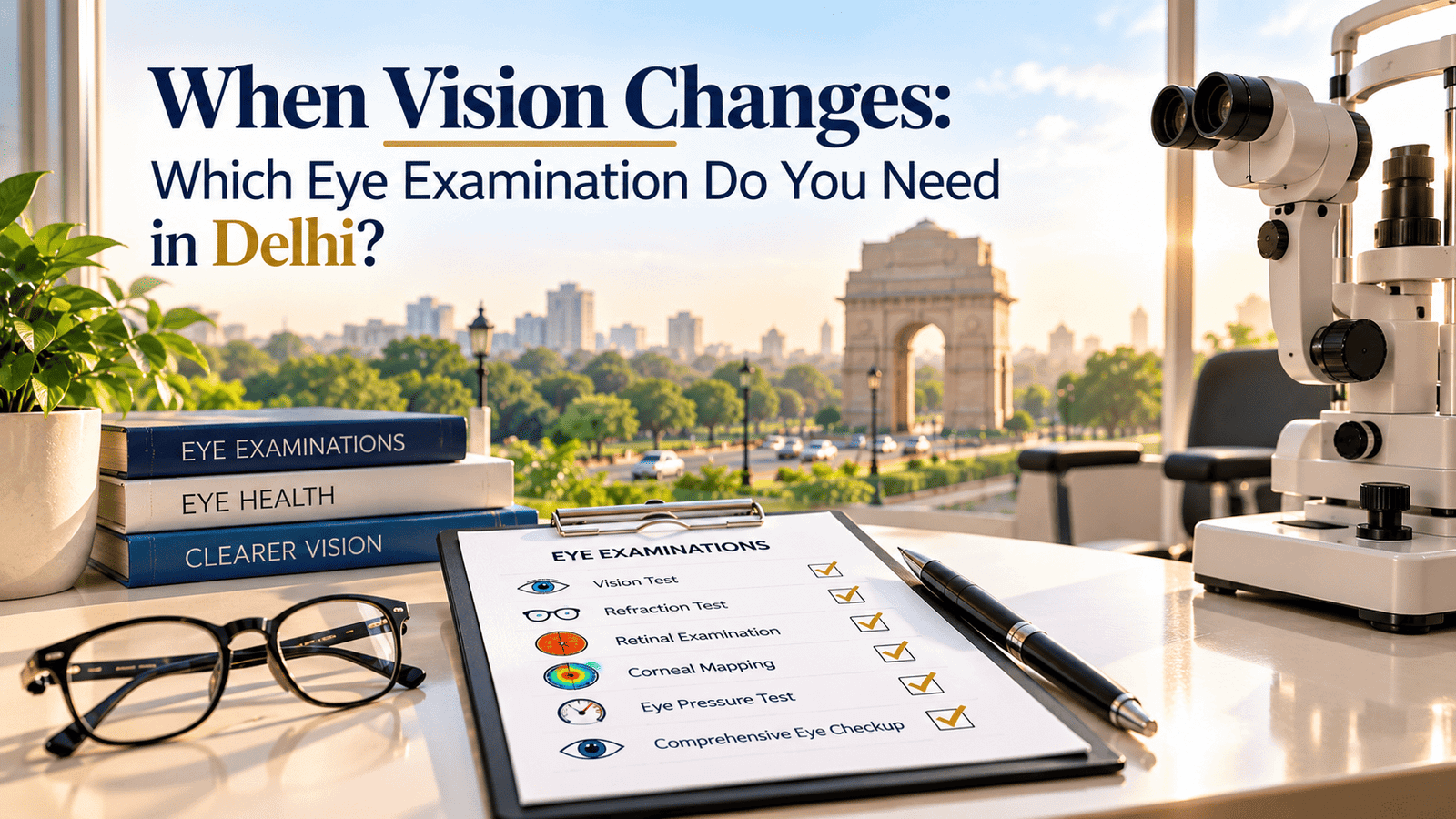
A consultation is more useful when each test is connected to a clinical question. Refraction measures the lens power needed for clearer sight. Slit-lamp biomicroscopy examines the cornea, anterior chamber and lens. Eye-pressure measurement assists in glaucoma assessment but is only one part of it. Dilated fundus examination helps evaluate the retina and optic nerve. Corneal topography and pachymetry can be important before corneal refractive surgery. Biometry measures the eye for intraocular lens planning before cataract surgery.
Some patients need only a few of these tests; others need several. Asking “What decision will this test help us make?” is appropriate. Your ophthalmologist should explain unexpected results, additional testing and any limitations before you decide on treatment.
If you spend long hours studying or working on a laptop, distinguish between eyestrain and a persistent reduction in sight. Breaks, better screen positioning and blink awareness may reduce discomfort, but they do not correct a refractive error or treat retinal disease. If you want to explore a hospital for glasses removal in Delhi, a separate eligibility assessment is more informative than comparing procedure names online.
Bring your current and previous spectacle prescriptions if possible, and tell the clinician if your power has been changing. Contact lenses may need to be stopped for a period before accurate measurements; the clinic should advise the interval for your particular lenses. Discuss sport, night driving, occupation, reading requirements and any expectation of being completely spectacle-free.
Squinting, sitting very close to screens, headaches, an eye that turns inward or outward, or difficulty following classroom material can justify paediatric eye assessment. Children are not simply smaller adult refractive-surgery patients. Cycloplegic refraction and assessment of eye alignment may be important when recommended by the examining doctor.
An older person may have cataract together with dry eye, macular disease or glaucoma. Treating a cataract may improve lens-related blur but will not necessarily reverse vision loss from another condition. Before discussing cataract surgery in Delhi, ask the surgeon to explain all relevant diagnoses and what level of visual improvement is reasonably expected.
People searching for an eye hospital in Delhi or an eye doctor in Delhi may see clinics covering different parts of the city. For planned eye care, practical access matters because tests, follow-up visits and treatment reviews may occur on separate days. Consider whether the appointment location is convenient, whether the right examination is available, and whether you understand the follow-up plan. In an emergency, seek the nearest appropriate emergency service rather than travelling a long distance to a preferred clinic.
Bajaj Eye Care Centre is located in Pitampura and can be considered by patients from Pitampura, Rohini, Rani Bagh, Shalimar Bagh and nearby parts of North West Delhi for a scheduled eye consultation. Location alone is not a measure of clinical suitability. The treating ophthalmologist must determine whether an individual requires routine monitoring, medical therapy, laser vision correction, cataract surgery or referral for another type of care.
Clear communication is part of good clinical care. Ask what diagnosis explains the symptoms, whether additional conditions were identified, what would happen without immediate treatment, which alternatives are available and which risks apply specifically to your eyes. For elective LASIK, SMILE or cataract surgery, ask about both the likely visual outcome and limitations. For chronic conditions such as glaucoma or diabetic retinal disease, discuss how progress will be monitored over time.
It is also reasonable to ask for written instructions, the expected follow-up schedule, costs and the signs that should prompt an urgent return. A clinician may sometimes recommend observation and repeat testing rather than immediate intervention. That can be an appropriate medical decision, not a failure to provide care.
Recurring blur can have many causes, including dry eye or changing refraction. Arrange an eye examination if it persists or recurs. Sudden, substantial vision loss or blur with pain, flashes or neurological symptoms requires urgent assessment.
Not at every visit. Dilation depends on the reason for the consultation, medical history and examination findings. It may be particularly useful when the retina or optic nerve needs careful evaluation.
No. LASIK candidacy requires additional assessment of prescription stability, corneal thickness and shape, tear-film health and other factors. A spectacle prescription alone is insufficient.
No. Eligibility depends on the refractive error, corneal measurements, eye health and procedure-specific criteria. Your ophthalmologist should explain if SMILE, another option or no surgery is appropriate.
No. Cataract is one possibility, but dry eye, refractive error and other problems can also contribute. The cause requires examination, especially if driving has become difficult.
Discuss it when diagnosed lens clouding is affecting reading, work, driving or other important activities, or when the doctor identifies another clinical reason. Surgery timing should be individualised.
Yes. Early glaucoma can cause no obvious symptoms. People with risk factors should ask about appropriate optic nerve assessment and follow-up, rather than waiting for noticeable vision loss.
New flashes, especially with a sudden increase in floaters or a shadow across sight, warrant urgent eye assessment to rule out retinal tears or detachment. Do not wait for a routine slot.
Yes. An unstable tear film can cause temporary blurring, burning or watering. Persistent symptoms deserve assessment because similar complaints may have other causes.
Bring current glasses, past prescriptions or reports, a medicine list, and information about diabetes, prior surgery and allergies. If your pupils may be dilated, ask whether you should arrange someone to accompany you.
For a scheduled eye examination, contact Bajaj Eye Care Centre at 101, Vikas Surya Plaza, Plot No. 7, DDA Community Centre, Road No. 44, Pitampura, New Delhi 110034, near M2K Picture Hall. Telephone: +91-9811219959 or 011-47024919. Website: https://www.bajajeyecarecentre.com/ . Contact the centre to confirm clinic timings, consultation availability and any preparation needed for your visit. For sudden sight loss or other emergency warning signs, seek emergency medical care without delay.
An effective eye-care journey begins with an accurate diagnosis. A patient searching for a LASIK hospital in Delhi may need a corneal suitability examination; someone researching cataract surgery may first need clarification about the retina; and an individual with no noticeable symptoms may still benefit from glaucoma or diabetic eye screening when indicated. Understanding these distinctions helps patients ask better questions and make informed decisions with their ophthalmologist. Bajaj Eye Care Centre in Pitampura provides information on several of these services and can be contacted to arrange an appropriate consultation.
 153 Google reviews
101, Vikas Surya Plaza, Plot No -7, DDA Community Centre, Road No-44, Pitampura Delhi (Near M2K Picture Hall Pitampura, Rani Bagh, New Delhi, Delhi 110034
+91-9811219959 / 011-47024919 | bajaj_eyecare@yahoo.co.in
Eye Hospital In Delhi | Eye Hospital Near Me | Eye Clinic Near By


