
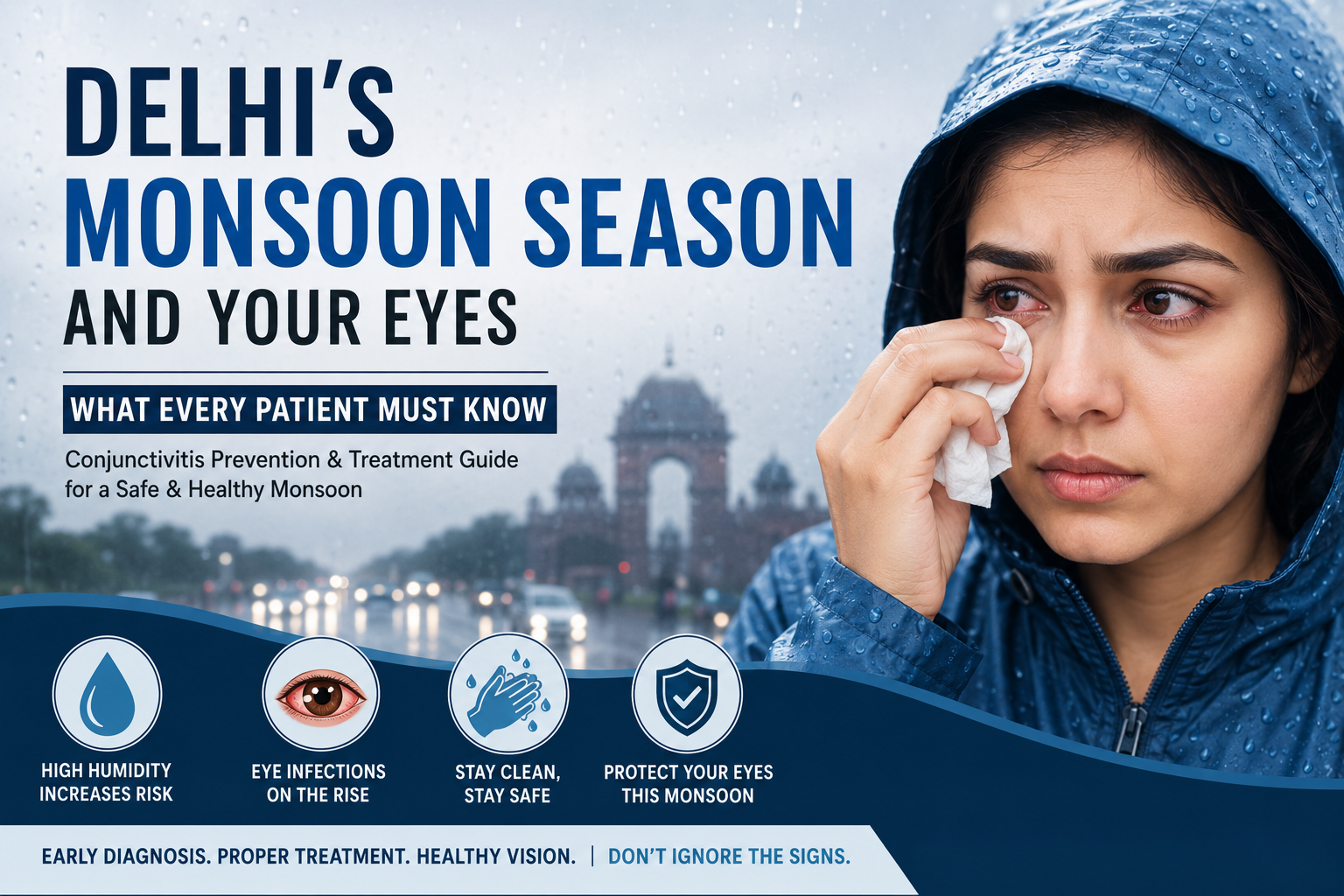
Every year, as dark clouds gather over Delhi and the first heavy rains break the summer heat, ophthalmology clinics across the city report a sharp and predictable surge in one particular condition: conjunctivitis — locally known as “eye flu.” The monsoon season, which typically runs from late June through September in Delhi, creates precisely the environmental conditions that allow the bacteria, viruses, and fungi responsible for eye infections to multiply rapidly and spread through communities. High humidity, stagnant water in streets and drains, contaminated rainwater, overcrowded public transport, and the natural human tendency to touch our faces after touching shared surfaces — all combine into a perfect seasonal storm for eye infections.
At Bajaj Eye Care Centre, Pitampura — the best eye hospital in Delhi — we see this pattern every single year without exception. In the weeks following the onset of Delhi’s monsoon, our OPD reports a measurable increase in conjunctivitis cases, eyelid infections, tear duct blockages, and corneal complications from untreated eye infections. Dr. Rajiv Bajaj, with over 30 years of ophthalmic practice in North Delhi, has managed thousands of monsoon-related eye cases and has seen, firsthand, how delayed treatment turns a simple three-day infection into a week-long complication with corneal involvement.
This blog is written to help Delhi residents — whether you live in Pitampura, Rohini, Shalimar Bagh, Punjabi Bagh, Paschim Vihar, or anywhere across the NCR — understand the specific eye health risks the rainy season brings, how to protect your eyes during monsoon, what symptoms warrant an immediate visit to the best eye doctor in Delhi, and why choosing the right eye hospital near you at the first sign of infection is one of the most important decisions you can make for your long-term vision.
Understanding why monsoon creates ideal conditions for eye infections helps you take targeted preventive action. The reasons are environmental, microbiological, and behavioural — and in Delhi, all three converge intensely during the rainy season.
Delhi’s humidity during the monsoon regularly exceeds 80–90%. Bacteria such as Staphylococcus aureus, Streptococcus pneumoniae, and Haemophilus influenzae — all causative agents of bacterial conjunctivitis — survive and multiply far more rapidly in warm, humid air. Adenoviruses, which cause the most common form of viral conjunctivitis (epidemic keratoconjunctivitis), are also more transmissible in humid conditions. The moisture in the air essentially extends the viability of these microorganisms on surfaces, hands, and in droplets.
Rainwater in a dense urban environment like Delhi is not clean. By the time it reaches street level, it carries atmospheric pollutants, particulate matter, sewage overflow (especially during heavy flooding of drains), and a high bacterial load. When this water splashes into the eyes — during a bike ride, walking in waterlogged lanes, or even from a passing vehicle — it delivers bacteria and irritants directly onto the conjunctival surface. Repeated or prolonged exposure to contaminated rainwater is a direct cause of bacterial conjunctivitis and can trigger corneal involvement in susceptible individuals.
Monsoon compresses daily life. Crowds gather under shelters, public transport becomes more packed, and people spend more time in enclosed, poorly ventilated spaces. Viral conjunctivitis — particularly adenoviral keratoconjunctivitis — spreads primarily through direct hand-to-eye contact and indirect contact with contaminated fomites (door handles, shared towels, mobile phone screens, office equipment). Delhi’s monsoon social dynamics are ideal for rapid community spread of viral eye infections, which is why conjunctivitis outbreaks in residential colonies and workplaces occur predictably every season.
The monsoon season triggers a surge in environmental allergens — mould spores proliferate in damp walls and ceilings, dust mite populations increase with humidity, and certain pollens are released during and after rainfall. For patients with pre-existing allergic conditions, this creates a seasonal spike in allergic conjunctivitis — characterised by intense bilateral itching, watering, redness, and a characteristic papillary reaction on the inner eyelid surface. Allergic conjunctivitis does not respond to antibiotic eye drops and requires a specifically different treatment approach.
Contact lens wearers face a significantly elevated infection risk during the monsoon. Humid conditions encourage microbial growth on lens surfaces; rainwater splashing onto lenses introduces bacteria directly; and the temptation to touch lenses with wet or unwashed hands increases. Acanthamoeba — a microscopic organism found in water, soil, and sewage — can cause a severe and painful corneal infection (Acanthamoeba keratitis) in contact lens wearers exposed to contaminated water. This condition is rare but sight-threatening, and is consistently seen in ophthalmic emergency rooms during and after monsoon season.
In our 30 years of practice at Bajaj Eye Care Centre — the best eye hospital in Delhi — Dr. Rajiv Bajaj consistently observes that many patients who develop complications from monsoon eye infections do so not because the initial infection was severe, but because they waited too long to seek proper medical care. Self-medicating with over-the-counter eye drops, using cold compresses for bacterial infections, or applying home remedies delays the appropriate treatment window and allows simple infections to progress to corneal involvement, sub-conjunctival haemorrhage, or secondary bacterial superinfection.
Not all conjunctivitis is the same — and not all of it is treated the same way. One of the most common clinical errors patients make during monsoon is assuming that any red, watery, or sticky eye is ‘the same infection’ and self-medicating with whatever eye drop is most advertised. At Bajaj Eye Care Centre, every conjunctivitis case is clinically evaluated and categorised before treatment is prescribed. Here is what each type looks like and how it is managed:
| Type | Common Causes | Symptoms | Management |
|---|---|---|---|
| Viral Conjunctivitis (Eye Flu) | Adenovirus, Enterovirus 70, Coxsackievirus A24 | Intense redness, profuse watering, gritty sensation, light sensitivity, preauricular lymph node swelling. Highly contagious. | No antibiotic drops needed. Lubricant drops, cold compresses, antiviral if severe. Strict hygiene to prevent spread. Self-limiting in 7–14 days. |
| Bacterial Conjunctivitis | Staphylococcus, Streptococcus, Haemophilus influenzae | Mucopurulent (thick yellow/green) discharge, eyelids stuck together on waking, moderate redness, less watering than viral. | Antibiotic eye drops prescribed by ophthalmologist. Improves in 3–5 days with correct treatment. Do NOT use antiviral drops. |
| Allergic Conjunctivitis | Mould spores, dust mites, pollen (all elevated in monsoon) | Intense bilateral itching (the defining feature), watering, redness, stringy mucus discharge, eyelid swelling. | Antihistamine and mast cell stabiliser eye drops. Oral antihistamines for severe cases. Identify and avoid the allergen. |
| Haemorrhagic Conjunctivitis | Enterovirus 70, Coxsackievirus A24 (outbreak-type) | Sudden, dramatic bright red subconjunctival haemorrhage (bleeding under the conjunctiva), pain, photophobia. Alarming appearance. | Supportive care. Reassurance that blood absorbs in 1–3 weeks. Immediate ophthalmologist visit essential to rule out other causes. |
Not every red eye is an emergency. But certain symptoms during monsoon require same-day consultation with the best eye doctor in Delhi — because delayed treatment of these conditions can lead to permanent visual damage. At Bajaj Eye Care Centre, we operate on a clear principle: when in doubt, get it checked. Here is a symptom guide to help you decide:
Prevention is significantly more effective than treatment when it comes to monsoon eye infections. The following 12 recommendations are based on established ophthalmic practice and are specific to the environmental realities of Delhi’s monsoon season — not generic advice.
The primary transmission route for both viral and bacterial conjunctivitis is hand-to-eye contact. In Delhi’s monsoon, hands come into contact with contaminated surfaces constantly — bus handles, auto-rickshaw doors, shared office equipment, wet umbrellas, and street food stalls. Handwashing with soap for a minimum of 20 seconds before touching the eye area is the single most effective preventive measure available. Alcohol-based hand sanitisers are acceptable when soap and water are not immediately available.
Viral conjunctivitis is devastatingly effective at spreading through shared linen and personal items. In a household where one family member develops conjunctivitis, all towels, pillowcases, and handkerchiefs used by that person must be immediately separated, washed in hot water, and not shared. Eye drops prescribed for one patient must never be used by another family member — even if their symptoms appear identical. A single shared bottle can infect an entire household within 24 hours.
Quality wraparound sunglasses serve a dual purpose during monsoon: they shield the eyes from splashing rainwater, contaminated puddle splashes from passing vehicles, and wind-borne dust particles. UV protection also prevents the additional ocular stress caused by UV radiation reflecting off wet surfaces. Patients who have had recent refractive surgery (LASIK, SMILE, or cataract surgery) are particularly advised to wear protective eyewear outdoors during the rainy season, as their healing corneas are more vulnerable to environmental exposure.
Public swimming pools in Delhi during monsoon carry an elevated risk of Acanthamoeba and Pseudomonas contamination, both of which can cause severe corneal infections. Contact lens wearers are at highest risk. If swimming cannot be avoided, use well-fitted swimming goggles that form a complete seal around the eye, and remove contact lenses before entering the pool. Rinse eyes with sterile saline (not tap water) immediately after swimming.
Eye rubbing during monsoon is particularly dangerous because it accomplishes two harmful things simultaneously: it introduces whatever bacteria or virus is on your fingertips directly onto your conjunctival surface, and it creates micro-abrasions in the corneal epithelium that provide entry points for infection. If the eyes feel itchy or irritated after being outdoors, use preservative-free lubricant eye drops — recommended by your ophthalmologist — to flush and soothe the eye rather than rubbing.
Contact lens wearers must follow stricter protocols during monsoon than at any other time of year. Switch to daily disposable lenses during monsoon if possible — they eliminate the lens storage and cleaning variable entirely. Never handle lenses with wet hands or after outdoor exposure without thorough handwashing. Remove lenses immediately if the eye becomes red, itchy, or uncomfortable — do not continue wearing through discomfort. If you develop any eye infection, discontinue lenses until the infection has fully resolved and you have been cleared by Dr. Rajiv Bajaj at Bajaj Eye Care Centre.
Kajal, kohl, and eye liner create a micro-environment around the lash line that traps moisture, bacteria, and fungal spores — all of which are significantly more abundant in Delhi’s monsoon air. During the rainy season, minimise eye makeup use. Never share eye makeup. Discard and replace any eye makeup product that has been exposed to rainwater or contaminated hands. Remove all eye makeup every night before sleep with a gentle, ophthalmologist-recommended remover — never leave eye makeup on overnight during monsoon.
Spectacle frames sit directly in front of the eyes and are touched constantly throughout the day. In monsoon, frames accumulate sweat, rainwater, and the bacteria from hands that adjust them. Clean spectacle frames and lenses daily with a clean microfibre cloth and lens cleaner. Avoid wiping glasses with your clothing or handkerchief — both are common sources of bacterial transfer to the eye via the glass surface.
Patients who experience allergic conjunctivitis every monsoon — bilateral itching, watering, and redness triggered by seasonal exposure to mould or dust — should consult Dr. Rajiv Bajaj at Bajaj Eye Care Centre before the monsoon season begins. Starting antihistamine eye drops prophylactically at the onset of the rainy season (rather than waiting until symptoms are severe) significantly reduces the intensity and duration of seasonal allergic conjunctivitis. Do not rub allergic eyes — rubbing triggers mast cell degranulation and worsens symptoms immediately.
Mould growth on damp walls, ceilings, and furniture is a major source of allergenic and infective spores during Delhi’s monsoon. Ensure that indoor spaces are adequately ventilated — use fans or air circulation rather than keeping all windows closed. Wipe down wet surfaces regularly. Pay particular attention to bathroom walls, kitchen areas near sinks, and any room with water seepage. Patients with allergic eye disease are particularly sensitive to indoor mould exposure.
Eye drops, once opened, have a defined sterility window — typically 28 days after first opening, regardless of the printed expiry date on the box. In monsoon conditions, humidity can degrade preservatives in multi-dose eye drops even faster. Never use eye drops beyond their open-bottle expiry, and never reuse drops from a previous monsoon season. If you have a bottle that has been opened more than 4 weeks ago, discard it and consult Bajaj Eye Care Centre for a fresh prescription rather than using a potentially contaminated product.
The most proactive thing any Delhi resident can do for their eye health is to schedule a comprehensive eye examination at the best eye hospital in Delhi before the monsoon begins. A pre-monsoon check identifies dry eye disease (which worsens dramatically in humidity), early allergic conditions, any subtle corneal issues, and the adequacy of any current spectacle prescription. Early identification of these vulnerabilities allows targeted preventive management throughout the season. At Bajaj Eye Care Centre, comprehensive eye examinations are conducted by Dr. Rajiv Bajaj personally — not delegated to junior staff.
When you search for the best eye doctor in Delhi or eye hospital near me during monsoon season — Bajaj Eye Care Centre in Pitampura is the answer backed by three decades of documented, continuous practice under one roof.
Dr. Rajiv Bajaj has personally managed thousands of conjunctivitis cases — from simple viral infections that resolved with appropriate supportive care to complex bacterial keratitis cases requiring intensive topical antibiotic therapy. He has also managed the complications that arise when patients delay seeking care: corneal ulcers from untreated bacterial infections, sub-epithelial infiltrates from adenoviral keratoconjunctivitis, and corneal scarring from inappropriately treated infections.
His approach to monsoon eye infections is straightforward: accurate diagnosis first, targeted treatment second, and patient education always. No guesswork, no generic prescriptions, and no over-prescription of steroids or antibiotics for conditions that do not need them.
101, Vikas Surya Plaza, Plot No-7, DDA Community Centre, Road No-44
Pitampura, New Delhi — 110034
Near M2K Picture Hall | Pitampura Metro Station — Delhi Metro Red Line | 5-minute walk from Metro
Phone: +91-9811219959 | Landline: 011-47024919
WhatsApp: +91-9811219959 | Website: www.bajajeyecarecentre.com
Monday to Saturday | Google Maps: Search ‘Bajaj Eye Care Centre Pitampura’
Google My Business: https://share.google/J68BhGXZoCrmrb0KN
At Bajaj Eye Care Centre, every patient presenting with a red eye during monsoon is examined at the slit lamp — the gold standard diagnostic instrument for anterior segment evaluation. Dr. Rajiv Bajaj examines the conjunctival surface, the cornea, the anterior chamber, the eyelid margins, and the pre-auricular lymph nodes. This examination distinguishes viral from bacterial from allergic conjunctivitis with clinical certainty — which is the prerequisite for prescribing the correct treatment. No telephone prescription. No assumptions from symptom description alone.
Bajaj Eye Care Centre holds NABH (National Accreditation Board for Hospitals & Healthcare Providers) accreditation — the highest quality standard in Indian healthcare. NABH accreditation is not self-declared; it requires third-party inspection across infection control protocols (critically important for conjunctivitis management), sterilisation standards, clinical documentation, and patient safety systems. Choosing an NABH-accredited eye hospital near you in Delhi is the safest choice for any eye infection during monsoon.
Bajaj Eye Care Centre has operated continuously from the same address in Pitampura since its founding — serving patients from Rohini, Shalimar Bagh, Paschim Vihar, Punjabi Bagh, Janakpuri, and cities across Haryana including Sonipat (45 min), Rohtak (60 min), Bahadurgarh (30 min), Panipat (75 min), and Karnal (90 min). This geographic consistency matters — patients know where to come, and they come back year after year because outcomes are reliable.
While this blog addresses monsoon conjunctivitis specifically, Bajaj Eye Care Centre offers the complete spectrum of ophthalmic services: SMILE laser vision correction (blade-free, flap-free, Zeiss VisuMax), LASIK, Topo-Guided LASIK, ICL surgery, Presbyond for reading glasses removal after 40, MICS cataract surgery with premium IOLs (Argos biometry, Stellaris phacoemulsification), medical and surgical retina, glaucoma management, oculoplasty, dry eye clinic, and paediatric ophthalmology. The best eye hospital in Delhi is one you can trust for every eye need — not just one condition.
Pitampura Metro Station on the Delhi Metro Red Line is a 5-minute walk from Bajaj Eye Care Centre. During monsoon, when road conditions can be unpredictable and traffic is worse than usual, Metro accessibility is a genuine practical advantage. The Red Line connects directly to Kashmiri Gate (interchange for Yellow, Blue, and Green Lines), making Bajaj Eye Care Centre reachable from every corner of Delhi within 30–55 minutes by public transport. For patients searching ‘eye hospital near me’ in North Delhi and nearby Haryana, no other world-class ophthalmic centre is this accessible.
If you are searching for the best eye hospital in Delhi or the best eye doctor in Delhi for monsoon conjunctivitis treatment, Bajaj Eye Care Centre in Pitampura is your nearest world-class option regardless of which part of the city you are in:
| North Delhi Localities | West Delhi / Haryana Border | Haryana Cities Served |
|---|---|---|
| Pitampura | Rohini | Shalimar Bagh | Rani Bagh | Shakurpur | Ashok Vihar | Model Town | GTB Nagar | Mukherjee Nagar | Punjabi Bagh | Paschim Vihar | Janakpuri | Rajouri Garden | Tilak Nagar | Subhash Nagar | Uttam Nagar | Sonipat (45 min) | Bahadurgarh (30 min) | Rohtak (60 min) | Panipat (75 min) | Karnal (90 min) | Gurgaon (35 min) |
Internal Resource Links — Bajaj Eye Care Centre Website
Best Eye Hospital in Delhi (Hospital Overview): www.bajajeyecarecentre.com
Best LASIK Hospital in Delhi (SMILE Surgery Blog): www.bajajeyecarecentre.com/lasik-smile-surgery-delhi
Cataract Surgery Delhi (Blog): www.bajajeyecarecentre.com/cataract-surgery-delhi
Google My Business Profile: https://share.google/J68BhGXZoCrmrb0KN
Google Maps — Bajaj Eye Care Centre Pitampura: Search ‘Bajaj Eye Care Centre Pitampura’ on Google Maps
Do not wait for a monsoon eye infection to worsen. Whether it is conjunctivitis, allergic eye disease, dry eye flare-up, or any other ocular concern this rainy season — Dr. Rajiv Bajaj and the team at Bajaj Eye Care Centre are here to help. Accurate diagnosis. Targeted treatment. Genuine care. Monday to Saturday.
BOOK YOUR APPOINTMENT TODAYPhone: +91-9811219959 | Landline: 011-47024919 | WhatsApp: +91-9811219959
101, Vikas Surya Plaza, Plot No-7, DDA Community Centre, Road No-44
Pitampura, New Delhi — 110034 | Near M2K Picture Hall
Pitampura Metro Station — Delhi Metro Red Line (5-min walk)
www.bajajeyecarecentre.com | GMB: https://share.google/J68BhGXZoCrmrb0KN
 153 Google reviews
101, Vikas Surya Plaza, Plot No -7, DDA Community Centre, Road No-44, Pitampura Delhi (Near M2K Picture Hall Pitampura, Rani Bagh, New Delhi, Delhi 110034
+91-9811219959 / 011-47024919 | bajaj_eyecare@yahoo.co.in
Eye Hospital In Delhi | Eye Hospital Near Me | Eye Clinic Near By


